 Josep
JosepIndia is changing in line with the digital revolution started by the government of Prime Minister Narendra Modi. Banking and finance segment in particular is going through a paradigm shift with some of the most remarkable Next-Gen initiatives. By launching the Pradhan Mantri Jan Dhan Yojana (PMJDY) to ensure that everyone has a bank account, the current government has made financial inclusion one of its top priorities from the beginning of its term.
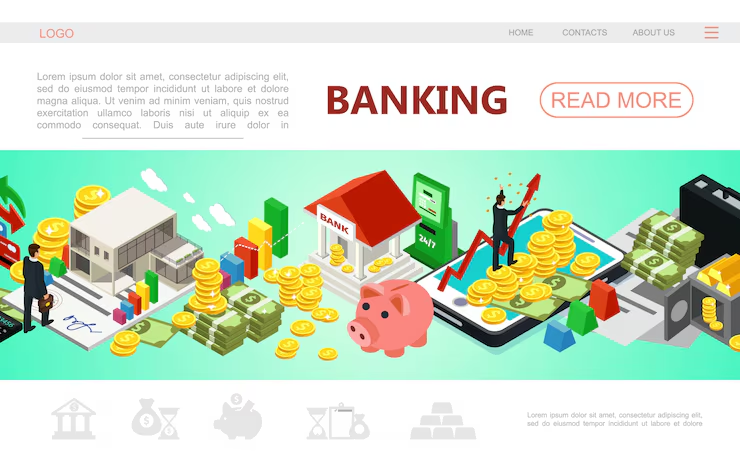
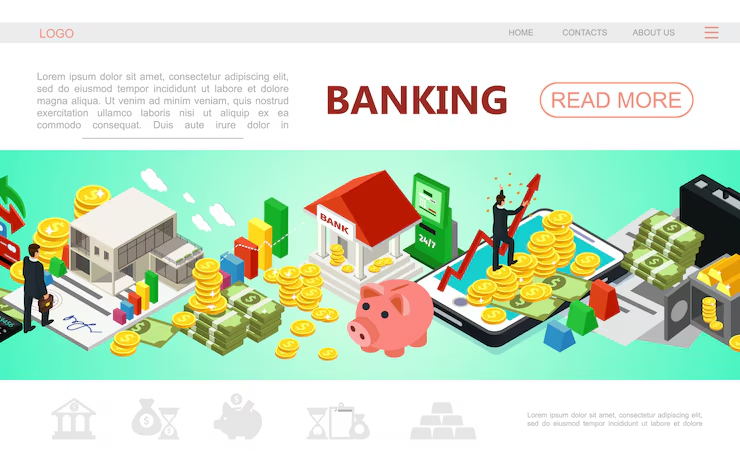
In line with this, the Indian banking industry launched a number of innovative initiatives to promote smart and simple banking methods. According to Rashi Aditi Ghosh of Elets News Network (ENN), one such novel innovation that has the full potential to alter the banking sector in India is the small finance bank. Beginning of a revolutionary banking method By issuing licenses to 11 payment banks and 10 small financial banks on August 19, 2015, the Reserve Bank of India (RBI) kicked off some significant changes to the country’s financial system. This initiative’s primary objective was to place the unbanked section of society outside the formal banking system. Big boys like Reliance Industries, Aditya Birla Group, telcos (Vodafone, Airtel), Indian Post, Tech Mahindra, Dilip Shanghvi (promoter of Sun Pharma), PayTM, Vijay Shekhar Sharma (One97), National Securities Depository Limited (NSDL), and Cholamandalam Distribution Services Ltd. received licenses for payment banks. Au Financier Ltd., Disha Microfin, Equitas Holdings, Ujjivan Financial Services, ESAF Microfinance and Investments, Utkarsh Micro Finance, RGVN Micro Finance, Suryoday Micro Finance, Capital Local Area Bank, and Janlakshmi Financial Services are among the ten applicants chosen to establish small finance banks. One local area bank, eight microfinance institutions (MFIs), and one non-banking financial company (NBFC) are among the ten applicants chosen. “The Global Findex Database 2014” is a World Bank paper: 38% of adults worldwide were unbanked, with India, China, and Indonesia accounting for the remainder. Both China and India reported strong growth in account ownership between 2011 and 2014.
India’s banking penetration increased from 35% to 53%, while China’s banking penetration increased from 64% to 79%. This growth showed that 175 million adults in India and 180 million in China opened accounts, accounting for roughly half of the 700 million new account holders worldwide. India 2015 by PricewaterhouseCoopers (PWC) In 2015, 233 million people in India did not have a bank account. This was down from 557 million in 2011, primarily due to the Pradhan Mantri Jan Dhan Yojana program, which made it easier for people to open new accounts. RBI, PMJDY, and PWC are the sources. Small Finance Banks, Big Reach
A type of niche bank known as a “small finance bank” can offer banking services like deposit acceptance and lending to small businesses, marginal farmers, and small and micro industries. Small finance banks are able to carry out all of the operations of typical commercial banks, albeit at a smaller scale and with a focus on the low-income market. Importance of Small Financial Institutions Expanding access to financial services in semi-urban and rural areas was the primary goal of small finance banks. Although on a much smaller scale, these banks have the ability to function almost identically to commercial banks. It is able to provide basic banking services, accept deposits, and lend to underserved segments of the population, such as small businesses, marginal farmers, micro and small industries, and even unorganized sector entities. Small finance banks and payments banks may share some functional areas, but they also have many important differences.



 admin
admin