 Josep
JosepGlobal trade refers to the transfer of goods and services between countries. It typically involves extra risks stemming from fluctuations in exchange rates, government regulations, legal frameworks, court systems, and financial markets.

Cross-border trade includes importing, exporting, entrepôt operations, foreign direct investments, outsourcing jobs, establishing production in other nations, and creating multinational corporations. Cross-border trade expands the accessibility for local merchants and producers—manufacturers enhance their offerings to meet international requirements.
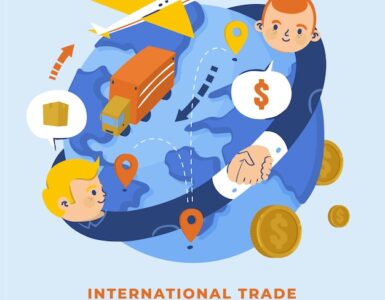
International trade involves the buying or selling of goods or services across geographic borders. It serves as a method for worldwide economic engagement between purchasers and vendors from various nations.
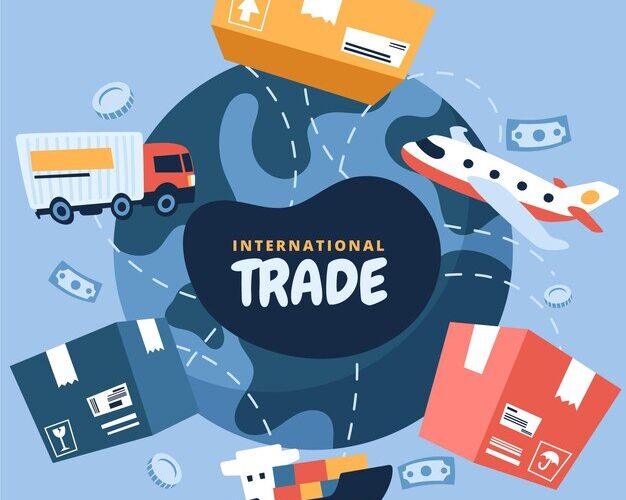
International trade happens through three channels—importation, exportation, and entrepot.
It operates on the concept of comparative advantage—one country focuses on creating a particular product—gains recognition—then provides the product to the global market.
International Trade Explained
Meaning of international trade
Global commerce propels the expansion of a nation. The import-export statistics rank among the leading factors that contribute to a nation’s gross domestic product. Consequently, every nation seeks to enhance its international trade connections with global powers.
During the 18th century, Adam Smith highlighted the comparative advantage analysis within international trade theory. It was established based on the mercantilist ideas of the British School of Classical Economics. In Wealth of Nations, the author prompted the necessity for the production of specialized goods in the face of high demand and limited resource availability. Subsequently, the classical economist David Ricardo introduced the concepts of comparative advantage.
Imports of goods and services occur for the following reasons:
Affordable cost
Exceptional quality
Absence of supply in the local market
High demand
Limited availability
In the same way, products are sent abroad for these reasons:
Increased worth in the global market
Global standard
Surplus output in the local market
Rising demand in the worldwide
Significance
In the global age, international trade has connected producers, sellers, and consumers.
Comparative Advantage: By engaging in international trade, a country acquires knowledge in a specific product or service and builds a reputation. For example, the US possesses a comparative edge in capital goods.
Global Development and Economic Growth: A rise in international trade enhances the domestic economy of the participating nations.
Achieving Economies of Scale and Specialization: When the demand for imported items from a specific country rises—the nation gains recognition for that specific product—production is intensified. The country of production reduces production costs by realizing economies of scale.
Increased Options for Consumers: When the market is filled with foreign products and services, buyers enjoy a wider array of choices. Customer choices are influenced by preferences and financial capability. More choices also lead to heightened competition among producers—resulting in greater product innovation and improved quality